Which Sprue Cutter? Why It's the Most Important Tool on Your Bench
Cheap side cutters crush, stress and tear your parts. Here's why a proper sprue nipper — GodHand in particular — is the best money you'll spend on your toolbox, and where the sweet spot between price and performance really sits.
Nigel · · 3 min read
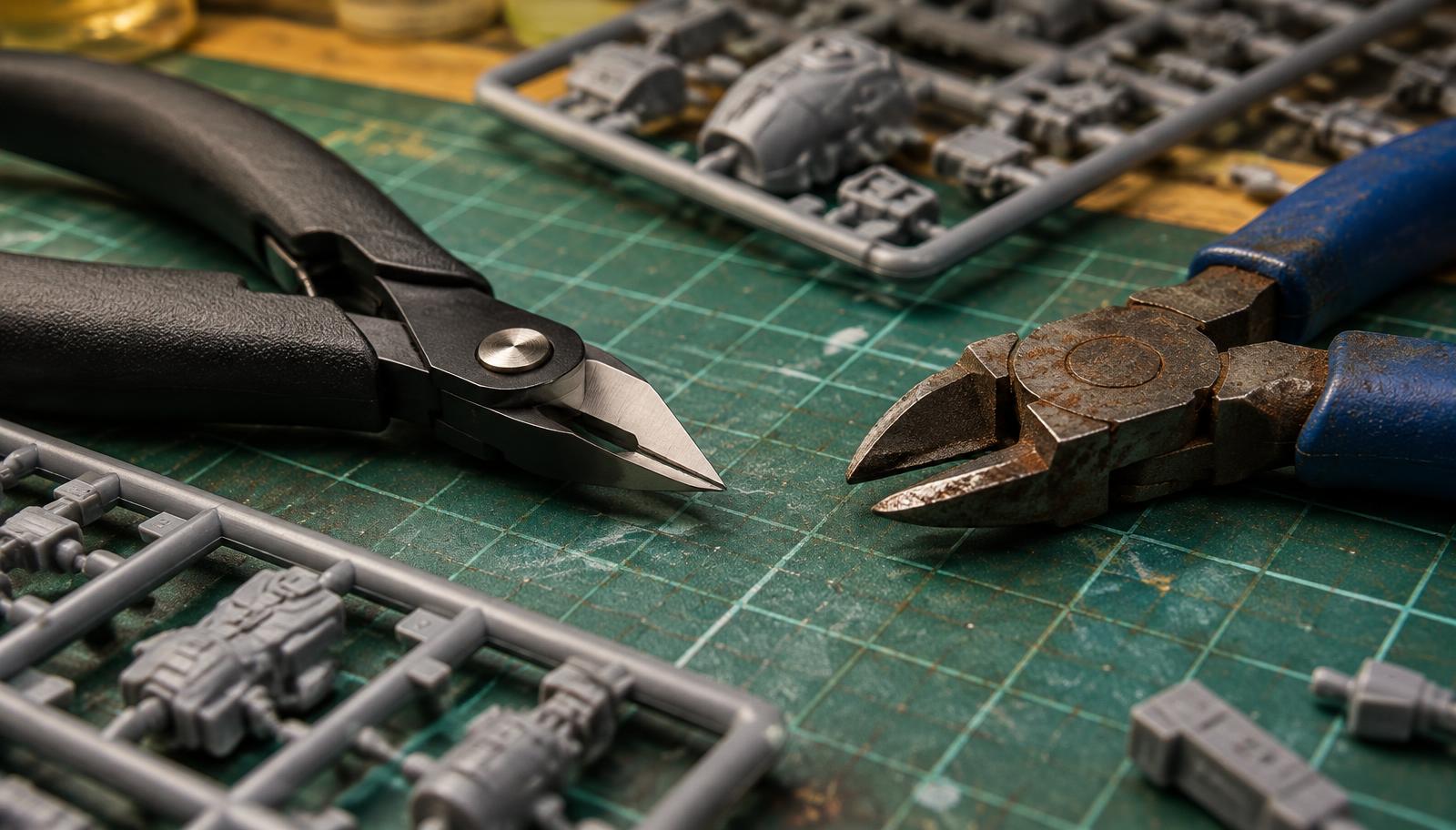
Ask ten modellers what the most important tool on their bench is and you'll get ten answers — airbrush, tweezers, a good knife. I'll argue it's the humble sprue cutter. Every single part of every kit you build passes through it first. Get that first cut wrong and you spend the rest of the build fixing it.
The trouble with cheap side cutters
Most of us started with a pair of electrical side cutters from the DIY shop or a pound-shop toolkit. They'll get parts off the sprue, but they do it badly:
- They crush rather than cut. Electrical cutters have thick, double-bevelled jaws designed to bite through copper wire. On plastic they wedge the material apart, leaving a squashed, pinched nub instead of a clean slice.
- Stress marks. That wedging action puts strain into the plastic, leaving pale white stress marks right next to the gate. They often show straight through primer and paint.
- Torn and chipped parts. On fine parts — aerials, pitot tubes, undercarriage legs, gun barrels — the force can snap or chip the part itself. There's no undo button on a broken 1/72 propeller blade.
- Loose, blunt jaws. Cheap pivots develop play quickly, the blades stop meeting cleanly, and they start tearing rather than cutting.
- More clean-up. Every rough nub means more knife work and sanding — more time, and more risk of damaging detail around the gate.
A bad cutter doesn't save you money. It costs you time on every part, and occasionally it costs you the part.
What a proper sprue nipper does differently
A dedicated hobby nipper has a flat back face and a fine, sharp cutting edge designed specifically for styrene. Instead of crushing, it slices. The best of them are single-blade designs: one very thin, very sharp blade that closes against a flat anvil, leaving a cut so clean that the gate mark can be almost invisible.
- Clean, flush cuts with little or no stress whitening
- Far less sanding and knife clean-up
- Delicate parts survive removal
- Less hand fatigue across a long session
GodHand: the benchmark
Japanese maker GodHand has become the name most modellers measure everything else against. A few of the models you'll come across:
- GodHand Ultimate Nipper 5.0 (SPN-120) — the famous one. A razor-thin single blade that leaves an extraordinarily clean cut. Typically around £50 in the UK.
- GodHand Blade One (PN-120) — a slightly tougher single-blade design that's more forgiving if you're heavy-handed. Usually around £40.
- GodHand Standard Nipper (PN-125) — a conventional double-blade nipper, and a big step up from DIY cutters for under £20.
The Ultimate Nipper genuinely changes how you build. Parts come off ready for paint far more often, and the time saved on clean-up across a whole kit is huge.
The catch: they're delicate
That ultra-thin blade is the reason it cuts so well — and also its weakness. Single-blade nippers are made for plastic only. Never use them on photo-etch, metal, resin pour blocks, or thick sprue runners. Twisting while cutting can chip the blade. Use the cap, keep them on a shelf rather than rattling around a tool box, and they'll last for years.
Affordability vs performance: finding your sweet spot
You don't need to buy the most expensive pair on day one. Think of it in three tiers:
- Entry hobby nippers (£8–£15) — Tamiya, Bandai Entry nippers and similar. Already miles better than DIY side cutters. A great first purchase.
- Quality double-blade (£15–£35) — GodHand PN-125, Tamiya's sharper models, Mr Hobby. Tough, sharp and good for everyday cuts, including thicker runners.
- Premium single-blade (£35–£65) — GodHand Ultimate and Blade One, Mr Hobby's single-blade. The cleanest cuts you can buy.
The best setup for many of us is two pairs: a tougher, cheaper nipper for rough work — cutting parts out of the sprue frame with a bit of the runner left on — and a premium single-blade for the final flush cut against the part. The cheap pair takes the abuse, the expensive pair does the precision work and lasts far longer.
The verdict
If you're still using a pair of electrical side cutters, retire them to the garage. Even a £10 hobby nipper will improve every build you do. And if you can stretch to it, a GodHand single-blade nipper is the single most noticeable upgrade you can make to your bench — because it touches every part, of every kit, every time.
Spend the money here first. Your fingers, your files and your filler will thank you.